


Translating AI Into Action For Small Businesses




Translating AI Into Action – Is That Possible?
There is rarely a day when someone is not talking about AI on the news. But are there any real world applications which make sense?
If this was a joke you might say – “You have just told me the punchline before the rest of the story”.
However, this is not a joke thus this is the action point.
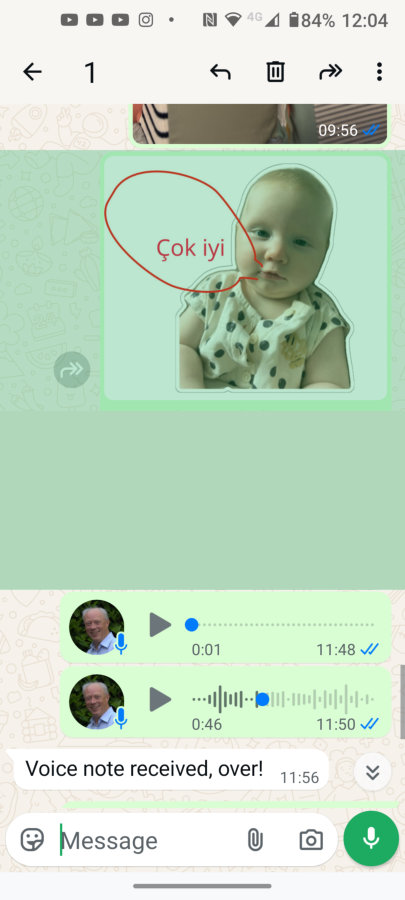
Send me a voice WhatsApp message and 4 pictures. If you are not familiar with using WhatsApp to create voice notes please see instructions.
If you need 6 pictures to tell the story send me 6, but please do not send 60 pictures and if you only have one picture – that will do.
I will convert the audio to text (that is the AI bit) and add the pictures, and then add the text to your website with appropriate SEO and links.
If you want to give a shout-out to a:-
- Supplier
- Customer
- Someone related to the story
Let me know who. i.e. send me a link to their website
How To Create A Voice Note In WhatsApp
If you are not familiar with this, you can create a voice note for yourself by finding you in WhatsApp and press the green microphone.
On a phone if you slide it up it will lock. Record your message and listen back. If happy send. If not re-record.
To send it to me just like a WhatsApp message find me and tell me the story. What the problem was, a few words about how you fixed it and why the client is now delighted.
Why A WhatsApp Voice Message?
If you use a keyboard all day it is easy to forget not everyone else does. Most business people are good at speaking and telling some sort of story. (If you are not you will not be in business for very long.)
Taking a couple of photos to go with the story using your phone is not a challenge.
Combine the two.
Send to Me.
Once Only Links Mattered & The More, The Better
That was a long time ago. The problem was people gamed the system and collected links from everywhere. These were not genuine referrals just an abuse of a system. Like people writing reviews and providing testimonials who had never seen or used a service.
Google became more discerning about links and today looks for a broader range of approvals. This page runs through some examples “2026 Trends To Consider To Promote Your Business” smaller businesses are never going to have the time and resources to tackle all the options but being present on a few will help considerably.
If You Want To Know Someone’s Name Tell them Yours…
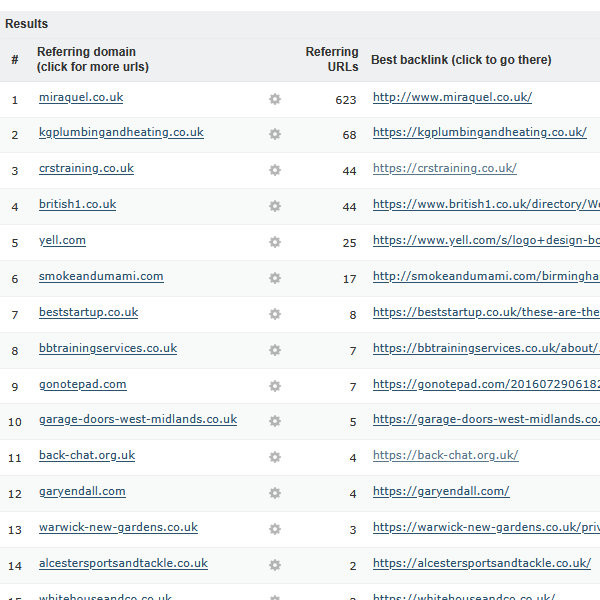
Virtually all smaller businesses have very few backlinks, getting a few will help, try this…
The best way I explain this in my head is….
Suppose we were in a bar, and we got chatting; we were both on our own and I said to you, “Buy me a beer.” You would probably be a bit shocked. Taken aback.
However, if I said to you, “I am enjoying your company; I am going to have another beer—what will you have?” You would probably accept my offer. We finish our beer, and we are both walking wherever we are going next. Chances are you would say, “Same again?” – You would buy me a beer back.
Links are like that. If you create links to other people and write a blog post about their content, Asking them for a link back does not seem such a big deal.
You have bought them a beer first.
https://majestic.com/ shows the results for how many links a website has. It’s not as comprehensive as Google, but Google only lets you know who your website has links from not other people. The Majestic database of links covers pretty well any business of any size which has been around more than a couple of years.
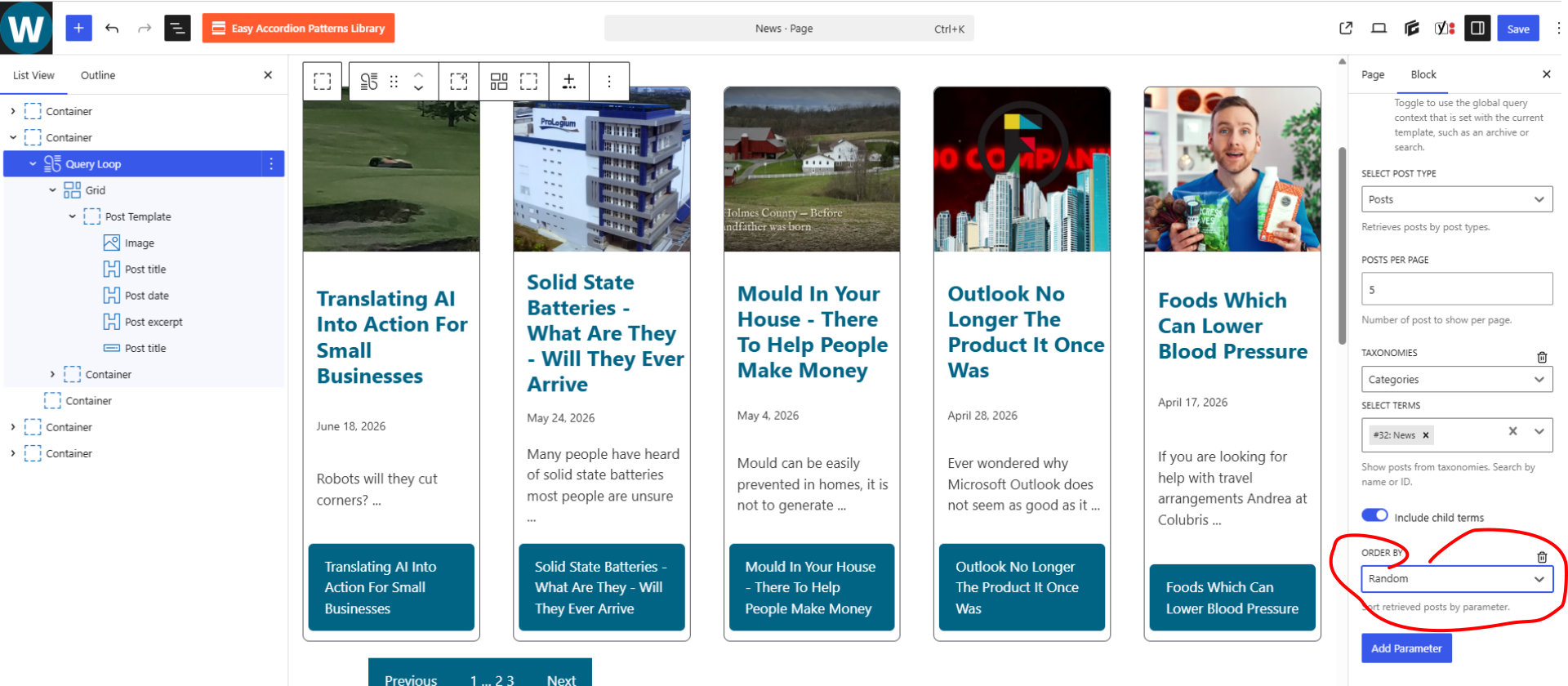
You would not create links to competitors, but there could be customers. If you sell a product to installers – mentioning who can fit your product could be helpful to them and to you. If you have ten customers create 10 stories. The order they are displayed on your website can be set to random.
Display Order Can Be Random
Many businesses are in a position where you have maybe 10 customers, and you do not want to upset any of them – send me ten stories and pictures and I will set the display to random, so everyone gets the same amount of visibility.
If you are thinking “Why not just ask AI to create 10 stories and put them on the website?” AI regurgitates the past.
- AI scripts
- AI voices
They are just not as good as real human stories. If you have real stories that will generate trust, a chance for you to demonstrate expertise. Be authentic – that is what people want and are looking for.
Google’s algorithms (specifically their “Helpful Content” guidelines) are designed to penalize content that is dreamt up by AI—meaning generic, shallow articles generated out of thin air by a machine that has never actually met a customer, held a lock, or fixed a door. Google hates that because it adds zero value to the internet.
- Google is looking for content which 100% human, authentic, and real.
- At Google this is known as “EEAT” (Experience, Expertise, Authoritativeness, and Trustworthiness).
One of the first quotes about computers was “garbage in, garbage out” which was used to defend less than optimal answers.
Turns out if you train AI on garbage the same answer applies.
Whilst Elon Musk might have annoyed most of the world’s population he is right about teaching cars to drive around without human assistance you need lots of training data. Teslas have collected billions of miles of training data which is why they are relatively good at driving.
Take that big idea and it can be applied to anything – if you have lots of data to train your models on then they generate better outcomes.
In this video, El (House of El: AI) demonstrates how real-world data collection, driven by high-ROI business applications, drastically reduces costs and outpaces expensive synthetic simulations.
Three specific examples from the video highlight the financial and operational savings generated by good real-world training data:
1. Smart Building Sensors (HVAC Energy & Repair Savings)
- The Application: A university installed Internet of Things (IoT) sensors (motion, CO2, and temperature) across its campus to monitor occupancy in real time, rather than running heating and cooling on rigid time schedules.
- The Cost Savings:
- $310,000 USD in annual utility savings due to a 28% reduction in campus energy use intensity.
- $280,000 USD saved in emergency repairs by detecting bearing degradation early on six air-handling units before catastrophic failure occurred.
2. Predictive Maintenance in Industrial Manufacturing
- The Application: Industrial factories deployed specialized IoT sensors to continuously track vibration, temperature, and acoustic signatures on machinery.
- The Cost Savings:
- Achieved a 25% reduction in overall maintenance costs.
- Achieved a 70% reduction in unplanned machine downtime by fixing components right before failure rather than following guesswork servicing intervals.
3. Real-World Driving Data vs OpenAI’s Sora Simulation Burn Rate
- The Contrast: OpenAI attempted to train its video/world-model (Sora) using simulated computer physics, which resulted in a massive cash burn of $1 million to $15 million USD per day in compute costs, leading to its shutdown due to unviable economics.
- The Real-World Alternative (Tesla Fleet): Tesla collected over 8 billion miles of real-world driving data across millions of vehicles. By collecting cheap, continuous sensor data directly from customer cars in the real world, they avoided the exorbitant compute expense of trying to simulate reality.
Core Strategic Takeaway
The key pattern El highlights is incentive alignment: You do not deploy data sensors solely to train AI; you deploy them to deliver immediate financial savings to a business (such as lower energy or repair bills). The valuable AI training data is simply a free, high-quality byproduct.


