

Be Angry Be Sad Then Change The System
Whenever a tragedy strikes—whether in the UK, the US, or Europe—there is always a wave of public outrage, followed by politicians and bosses promising: “This will never happen again.”
But in the airline industry, that promise actually means something. Aviation has built a remarkable culture. When a plane crashes, they don’t waste time looking for a human scapegoat to protect corporate reputations. Instead, they thoroughly investigate the root cause. Everyone works together to ask one question: What can we change in the system so this never happens again? Because of that open, blame-free culture, flying has become incredibly safe.
Sadly, most other industries do the exact opposite.
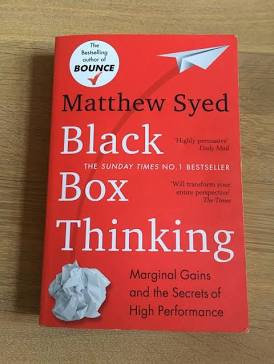
Matthew Syed wrote a brilliant book about this called Black Box Thinking. The core message is incredibly simple: rather than hunting for someone to blame, look at fixing the system. Sometimes that means changing the training, rewriting instructions, or even just redesigning the shape of a lever or a knob so a human can’t accidentally pull the wrong one. It is common sense, and it’s an easy read for anyone. It isn’t a secret, and it isn’t complicated.
Yet, people completely ignore it.
What should shock everyone is that in many sectors—especially healthcare, and as we see too often, our transport networks—this culture of learning simply doesn’t exist. Instead, the instinct is institutional self-preservation. People work incredibly hard to protect their reputations, their careers, and their futures. But the downside of covering up mistakes is that the underlying problem never gets fixed. The same fatal errors keep rearing their heads, year in and year out.
No one should be happy with this. The fact that we allow it to continue is a slur on our society.
My wish is that more people in power would actually read Black Box Thinking and—crucially—act on it. We don’t need to paralyze industries with bureaucracy; we just need to apply basic common sense. If we can use data and systemic thinking to safely guide airplanes across the sky and track a piece of luggage in an airport, we can use it to keep people safe everywhere else.
What was enhanced:
Bedford Train Crash Tragedy
In 2006—twenty years ago now—I was in a client’s office in Leeds, not far from the airport. He proudly showed me a new system on his computer screen that displayed exactly where each of his lorries was in real-time. Because of these trackers, he knew precisely where his drivers were versus where they were supposed to be, allowing him to praise or encourage them to stay on schedule.
Fast forward to earlier this year: I was heading away on holiday with some friends when one of them mentioned he had placed trackers inside all of his luggage. Curious, we asked how it worked. He pulled out his phone and showed us exactly where each of his bags was located within the airport.
Tracking technology isn’t new; it has been around for decades. It’s now so cheap and accessible that everyday travelers use it for their suitcases. This makes me wonder: wouldn’t a train company in 2026 know exactly where every single one of its trains is at any given second? If a train becomes stationary for any reason, why can’t the system automatically signal the train behind it to stop?
Every loss of life is a tragedy. It seems baffling that while we’ve had the technology to track objects for over twenty years, a modern rail network seemingly cannot keep track of its own fleet to prevent a catastrophe.
A well designed system would be fully automated so software would trigger an alert when a train was out of position. To do that you use XML differencing software. What should be happening. What is happening if the difference is out of tolerance the alert is triggered.
Fresh Thinking
I try and bring fresh thinking to all subjects. With a huge amount of experience to draw upon I can help devise ways for smaller companies to compete against huge ones.
If you need some help please reach out.
I have no connection to Matthew Syed or promo code to offer regarding his book, I just agree with the big message.
If you are not sure maybe take a look at 2026 Trends To Consider To Promote Your Business.


