
Authentication Of Your Photos
Once a photo was proof of something. A photo stopped being reliable standalone proof in the mid-to-late 2010s when software started to enable items to be added or removed from photos with comparative ease. Today a photo proves very little with the arrival around 2022 to 2023 with the sudden explosion of photorealistic AI image generation.
Today, a photo on a website or social media feed proves very little on its own. Anyone can generate a high-resolution image of a busy factory floor, specialized machinery, or a pristine warehouse in seconds.
The Evolution of Visual Trust
- Pre-2000s (Film & Early Digital): Photos were absolute proof. “Seeing is believing.”
- 2000s–2010s (Photoshop Era): Photos could be edited or airbrushed, but creating a completely fake, convincing scene required significant time, skill, and money.
- 2022–Present (AI Era): Stock photos and synthetic AI images mean a photo on a screen proves nothing about whether a business actually exists or manufactures anything.
Why Metadata and Google Place Data Restores the “Proof”
Because visual images can no longer be trusted on face value, search engines rely on verified background data (EXIF metadata) to confirm authenticity.
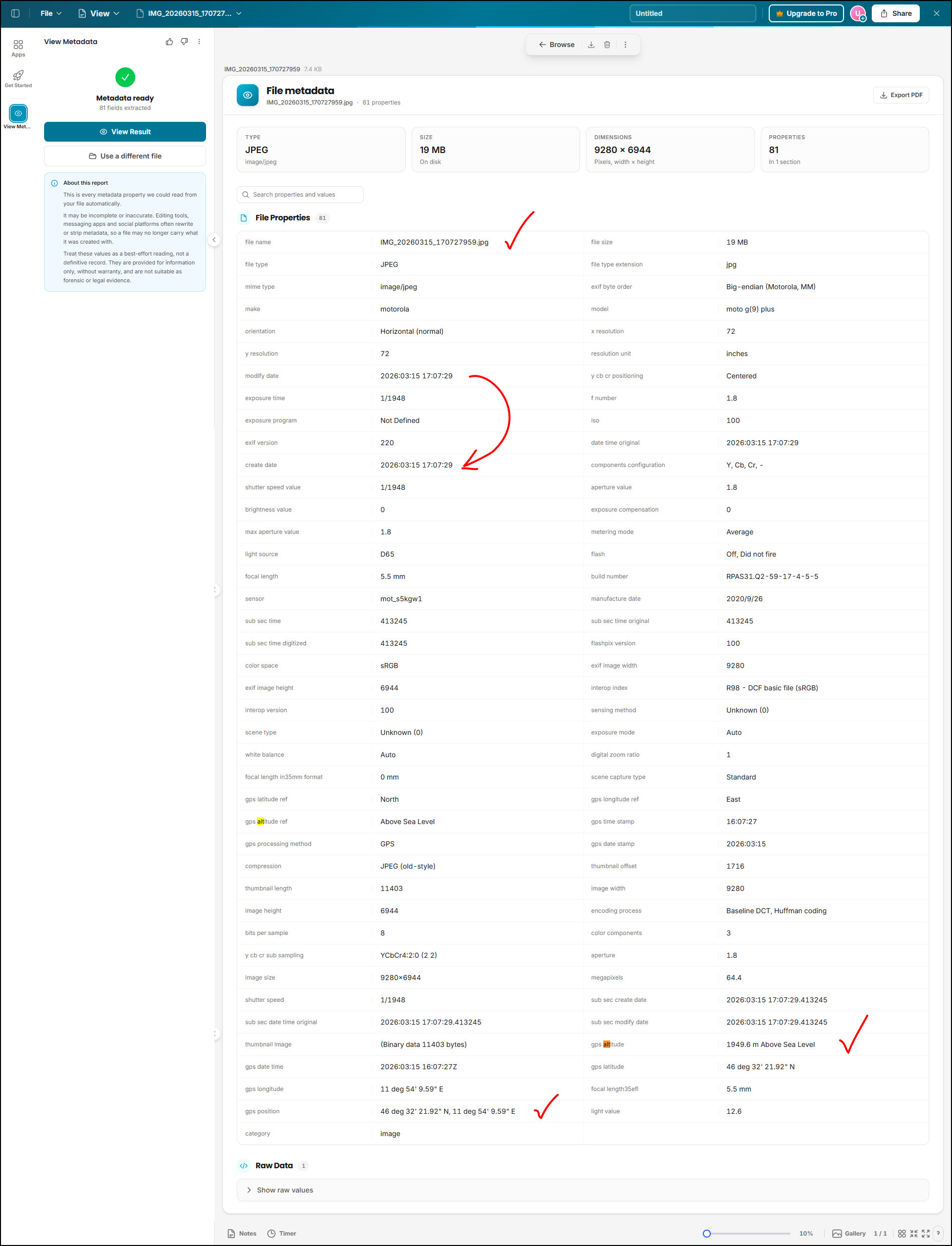
- The Hidden Digital Stamp: When a smartphone takes a photo, it embeds non-visual proof—GPS coordinates, date, time, and device details—directly into the file.
- Cross-Referencing Reality: When uploaded to a Google Business Profile, Google matches those exact GPS coordinates against your client’s registered physical address.
- Proving Local Presence: AI can generate a picture of a widget, but it cannot fake a live stream of authentic, geotagged uploads originating consistently from a specific factory floor in the UK.
Why Metadata and Google Place Data Restores the “Proof”
Because visual images can no longer be trusted on face value, search engines rely on verified background data (EXIF metadata) to confirm authenticity.
- The Hidden Digital Stamp: When a smartphone takes a photo, it embeds non-visual proof—GPS coordinates, date, time, and device details—directly into the file.
- Cross-Referencing Reality: When uploaded to a Google Business Profile, Google matches those exact GPS coordinates against your client’s registered physical address.
- Proving Local Presence: AI can generate a picture of a widget, but it cannot fake a live stream of authentic, geotagged uploads originating consistently from a specific factory floor in the UK.
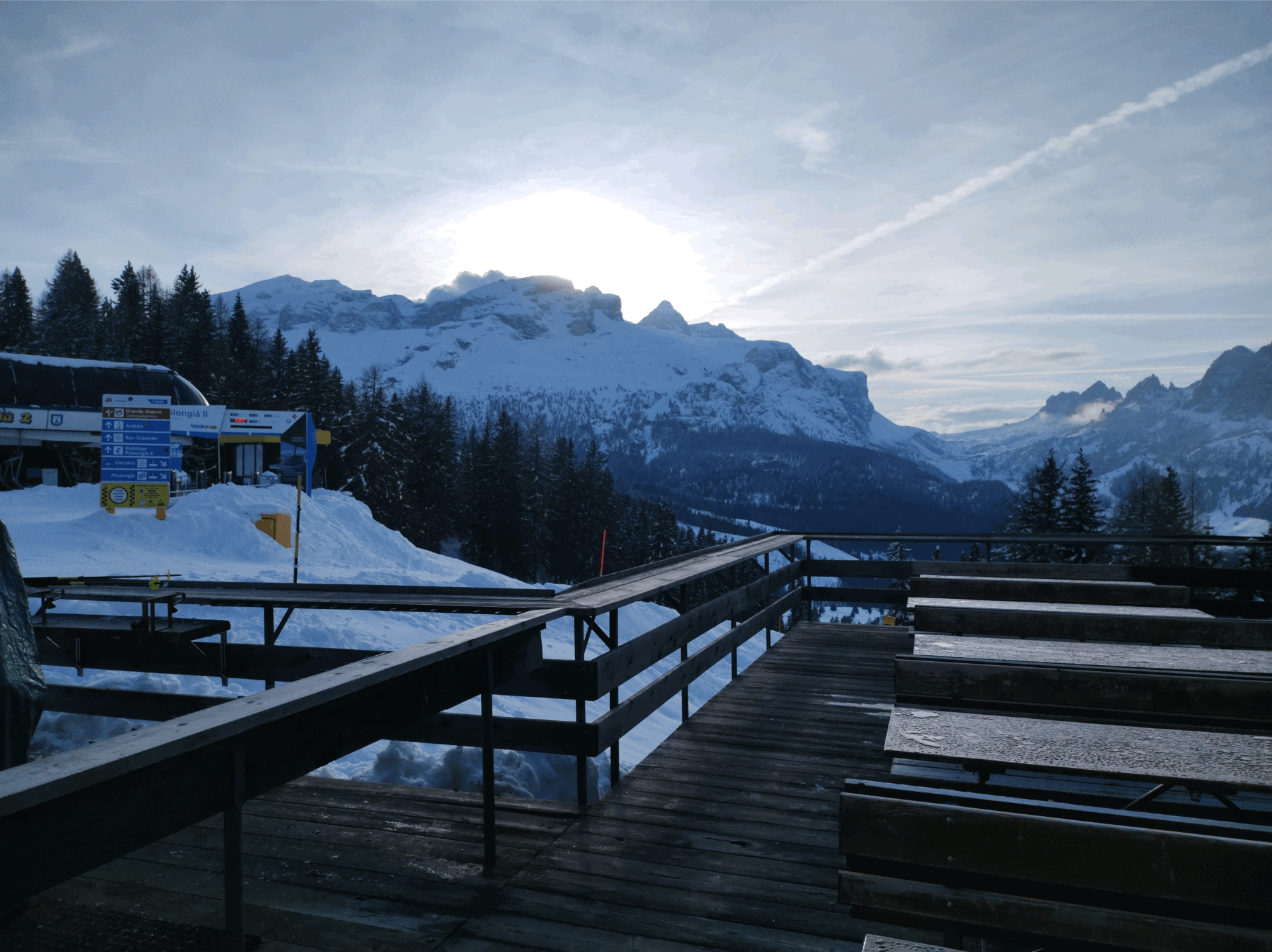
Below are some photos from a skiing adventure in the Italian Dolomites in March 2026
- Example photo
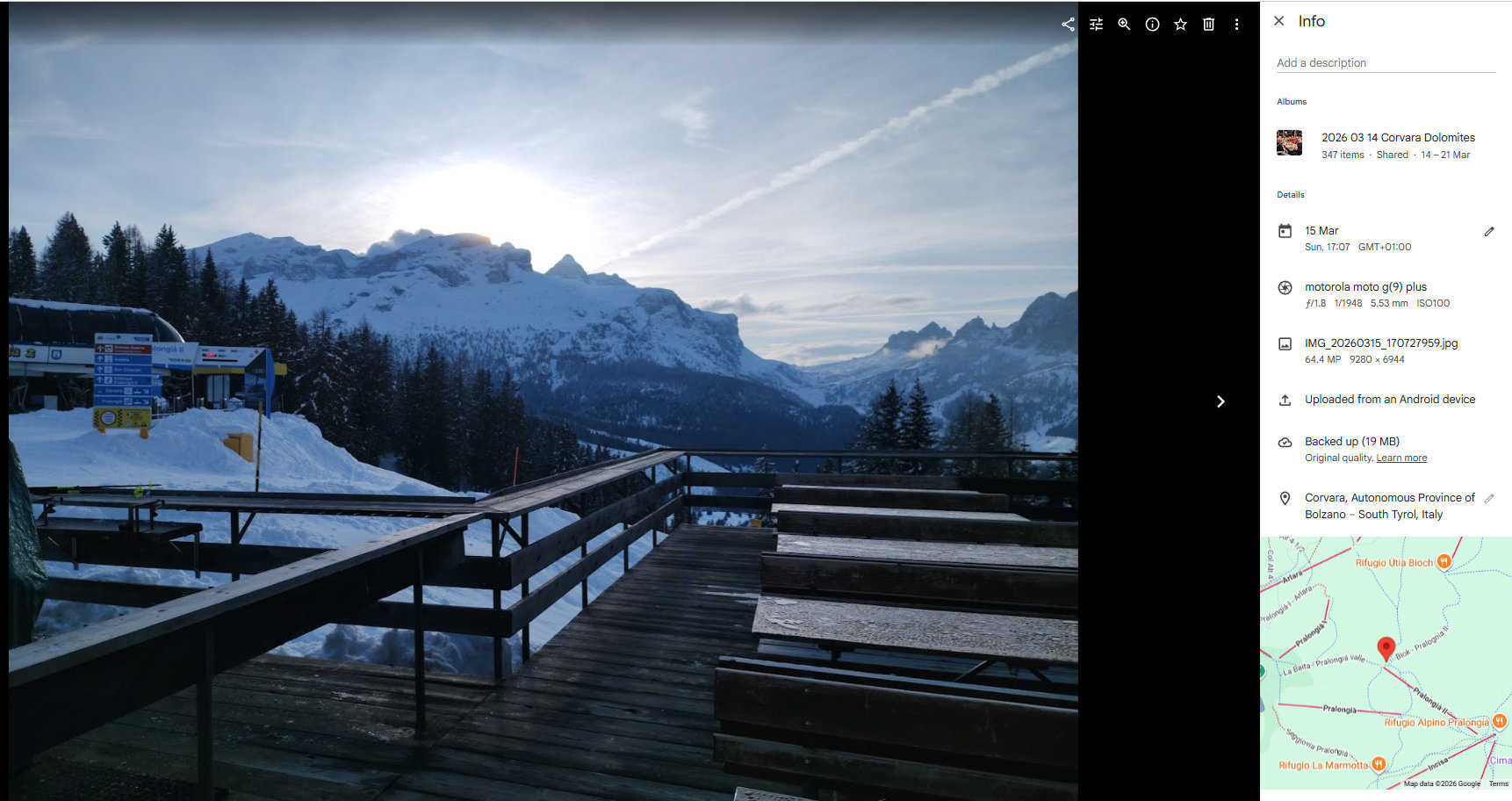
- Where is it? – Because Location was switched on – the exact location is recorded.
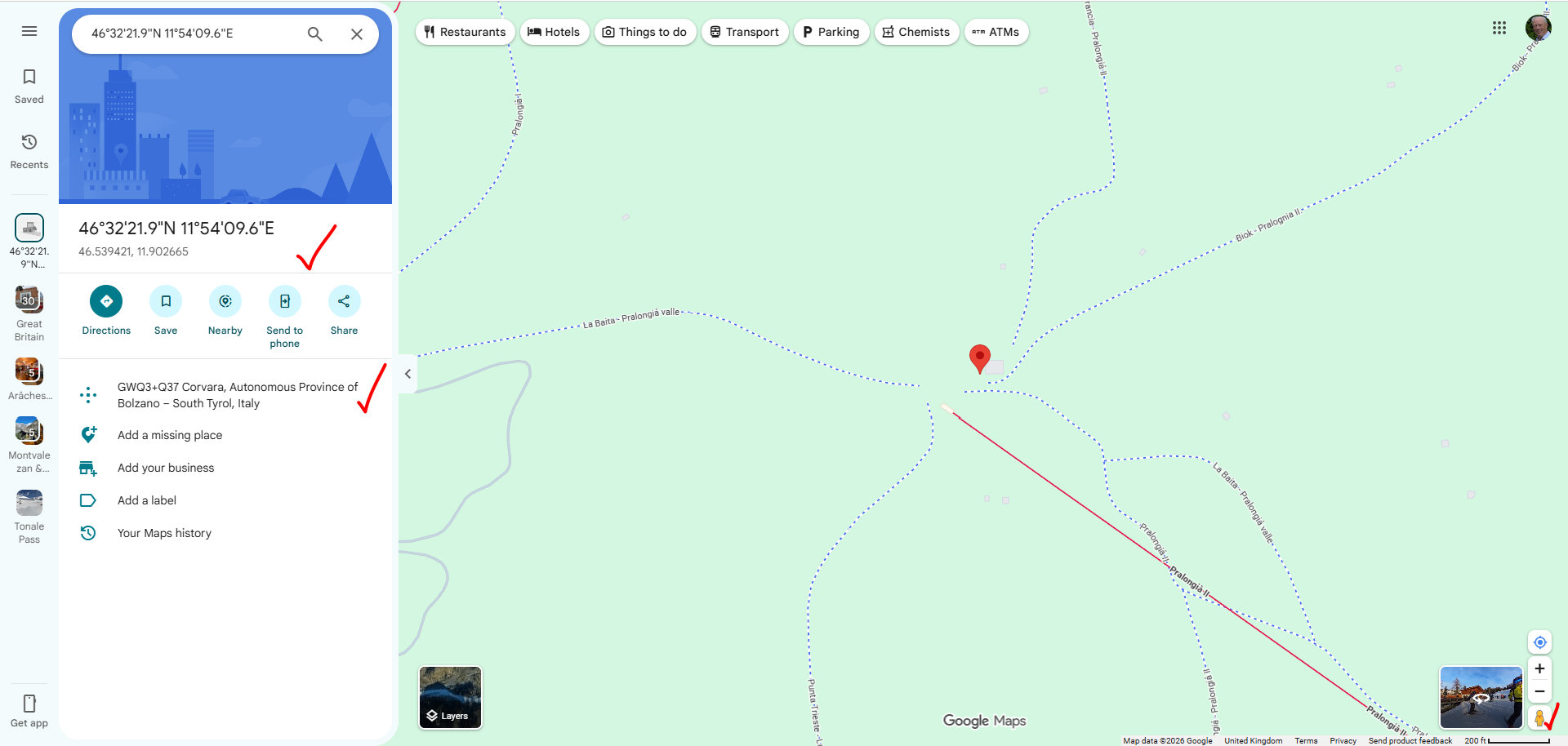
- You can drill down into that location data to discover more.
- Bottom right corner the Yellow Man (red tick)
- Try dropping that on map.
Take a look for yourself by clicking this link!
Who are the two guys in the black and yellow jackets? – They are security because this graphic is created by a chap with a camera on his back. The camera has multiple lenses and costs more than most new cars, hence the security to guide him and keep others away from the filming. On closer inspection I think this is effectively someone creating a Google style street map, the idea is the same, I am going to guess slightly cheaper equipment and yet remarkable.
A few ski location feature Google Street View – which of course this is not a street it is piste number 8 – which is a wide blue, which runs near the Pralongiá lift area (right by the La Baita hut) and runs all the way down toward Corvara. This is the way down at the end of the day. You just need to a avoid the Piste Bashers coming up!
Below – the graphic shows how much the data location captures.
The location data is as close to exact as makes no difference and also the altitude is captured – this is plus or minus a few metres but is pretty close.