

Why Is It So Warm In Europe – A Lack Of Pollution!
The Irony of a cleaning up energy is the pollution reflected back sunlight. Take away the pollution and more of the suns rays reach the earth’s surface.
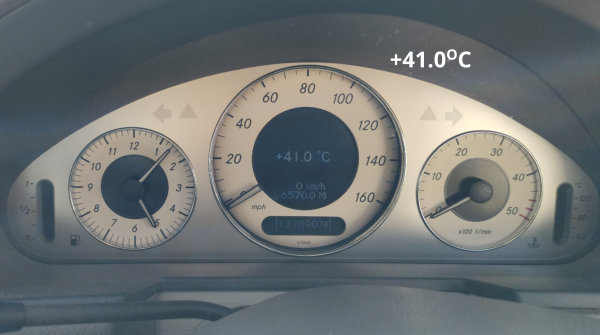
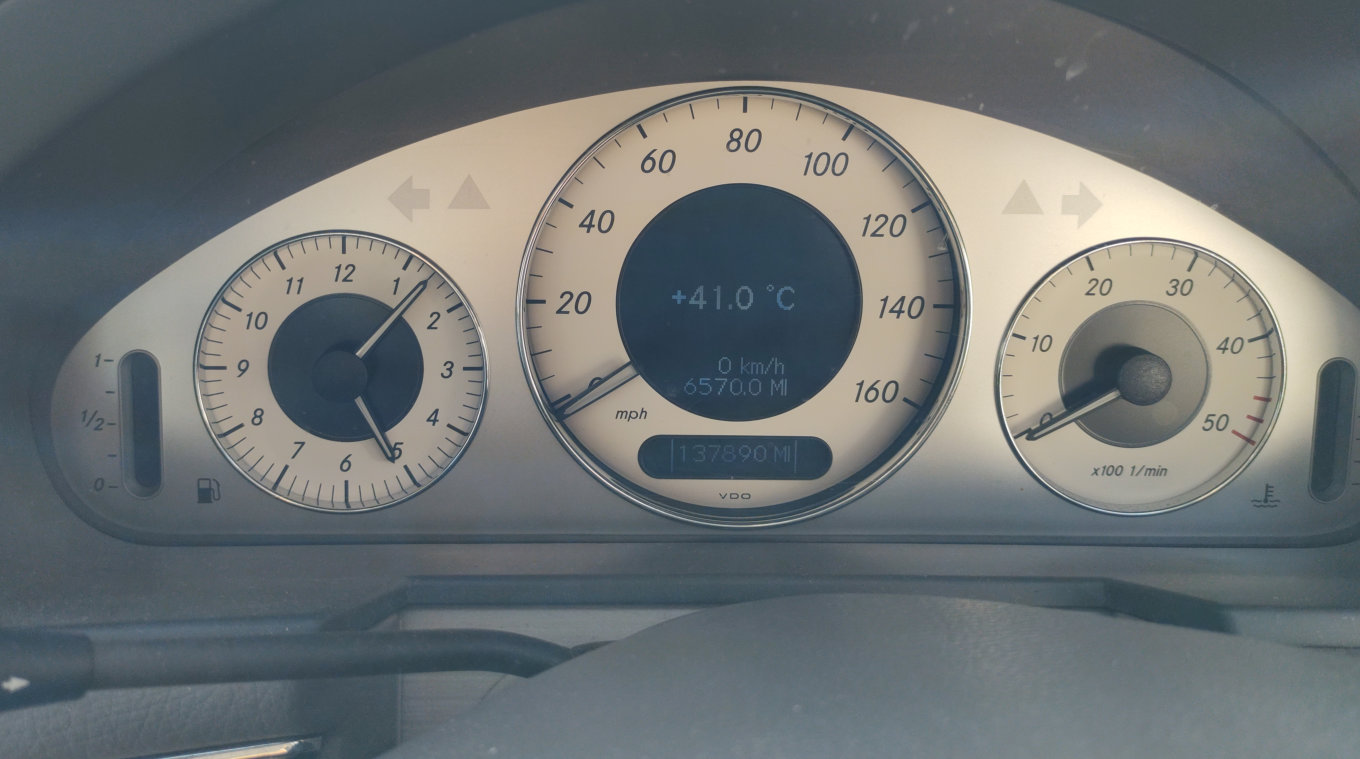
I got in my car and put the key in the ignition, and I was not surprised to see the outside temperature was showing 41oC. Date 9th July 2026. Location Wakefield England not known for being remarkably hot.
The Solution? – More Trees and Wetlands (slow run-off after rain)
1. How Planting Trees Cools the Climate
Trees cool the atmosphere through three main mechanisms:
Evapotranspiration (Nature’s Air Conditioner): Trees pull liquid water from deep in the soil and transpire it as water vapour through their leaves. This phase change absorbs heat energy from the surrounding air (converting sensible heat into latent heat). A single mature tree can transpire hundreds of gallons of water a day, lowering ambient air temperatures in its vicinity by 2°C to 8°C (3.5°F to 14°F).
Shade and Ground Coverage: Canopy shade prevents direct sunlight from striking and heating up bare ground, rocks, or asphalt, drastically reducing the heat radiated back into the local environment.
Carbon Sequestration: Over long timescales, growing forests absorb atmospheric carbon dioxide ($\text{CO}_2$), mitigating the primary driver of global warming.
2. How Slowing Rainwater Cools the Landscape
When rain falls on degraded land or paved urban surfaces, water drains away rapidly into streams and oceans. This leaves the landscape dry, baked by the sun, and prone to rapid surface warming.
Slowing down rainwater using wetlands, swales, leaky dams, and healthy soils reverses this process:
Fast-Drain Landscape | Slowed / Retained Landscape |
Water flushes out in hours | Water sinks into aquifers and soil reserves |
Soil dries out rapidly; heat builds up | Sustained moisture allows continuous evaporative cooling |
Increases risk of flash floods & heatwaves | Buffers local climate against extreme heat and drought |
Beavers! We Need More Beavers Than Ever Before In Europe
- “The Busy Beavers Bringing Wetlands Back to the UK” | WILD HOPE (Nature on PBS)
- Creator: Nature on PBS
- Why watch: Part of the Wild Hope series, this video follows conservationists reintroducing Eurasian beavers to depleted UK landscapes. It provides clear field footage showing how quickly beaver dams capture runoff, saturate parched subsoil, and turn dry ditches into resilient, water-retaining sponges.
“We Let Beavers Transform an Old Farm”
Creator: Planet Wild (in collaboration with Rewilding Oder Delta)
Why watch: A practical, team-led project that bought an abandoned, dry fish farm in Poland and allowed a family of beavers to re-engineer the landscape. It features real conservationists explaining the hydrology of how beaver dams retain surface water and slow streamflow.
There are many more beaver videos on YouTube – the story is the same, by slowing down the flow of water with small dams – more water soaks into the ground which is released over time, reducing the temperature in the surrounding area and reducing the risk of fires. The scientific word for this is the Albedo rate.
Albedo measures how effectively a surface reflects solar radiation, expressed as a value from 0 (a theoretical “blackbody” that absorbs 100% of light) to 1 (or 100%, a perfect reflector that bounces all light back). High-albedo surfaces like fresh snow (0.80–0.90) and bright ice reflect the vast majority of incoming sunlight, keeping the surrounding local environment cool. Conversely, low-albedo surfaces like dark asphalt (0.05–0.20), dense pine forests, and open ocean (0.06) absorb most of the sun’s shortwave radiation, storing it as heat and warming the local area. This physical property powers a critical climate loop known as the ice-albedo feedback: as global temperatures rise and dark land or open water replaces bright, reflective ice, the surface albedo drops, causing the planet to absorb even more thermal energy and accelerating local and global heat retention.
Dry land heats up much quicker than wet marshy land. Ironically after centuries of draining farmland we need to make some of that land much wetter.
Has anyone ever estimated when air pollution started to block out the suns rays in Europe and thus keep it cooler?
Yes, atmospheric scientists and climate historians have extensively studied and estimated this phenomenon—known scientifically as aerosol cooling or global dimming.
Wikipedia
Reconstructions of historical emissions, ice-core sulfur data, and radiative forcing models show that air pollution began measurably scattering sunlight over Europe in the late 19th century, with its cooling effect hitting peak intensity between 1950 and 1980.
Wikipedia
The Onset: Early Industrial Era
1850s–1940s
As Western Europe rapidly industrialized, massive increases in coal burning released sulfur dioxide (SO2) and black carbon into the troposphere. Early modeling indicates that by the turn of the 20th century, aerosol concentrations over Western Europe were already dense enough to scatter incoming sunlight back into space, subtly offsetting early greenhouse warming.
Peak European Dimming
1950s–1980s
Post-WWII industrial growth led to unprecedented levels of atmospheric particulate pollution. Systematic solar radiation measurements established during the 1957–1958 International Geophysical Year revealed that surface sunlight over Europe declined by roughly 4% to 5% per decade. In 1989, researcher Atsumu Ohmura at ETH Zurich formally documented that sunlight reaching Europe’s surface had dropped by over 10% compared to mid-century levels. This pollution blanket created a net cooling effect that masked much of the concurrent warming caused by carbon dioxide.
The Reversal: Global Brightening
1980s–Present
Following international treaties—such as the 1979 UNECE Convention on Long-Range Transboundary Air Pollution—and strict sulfur scrubbing regulations, aerosol emissions dropped sharply across Europe (sulfur dioxide fell by over 80% since the late 20th century). As the atmospheric particulate shadow cleared, Europe entered a phase of “global brightening,” which unmasked accumulated greenhouse warming and led to accelerated regional temperature increases.
How Air Pollution Cooled the Continent
Aerosol cooling operates through two distinct physical mechanisms:
Direct Effect (Scattering & Absorption): Fine particles, particularly sulfate aerosols, act like microscopic mirrors, reflecting solar radiation back into space before it can warm the Earth’s surface.
Indirect Effect (Cloud Albedo): Sulfates act as cloud condensation nuclei. Highly polluted air produces clouds made of a larger number of smaller water droplets, making the cloud deck much brighter and more reflective than natural clouds (the “Twomey effect”).
Enlit World
Climate models estimate that during the peak dimming decades of the 1970s, aerosol cooling over heavily polluted regions of Northern and Western Europe offset approximately 0.5°C to 1.0°C of greenhouse gas-driven warming.
Ironic that reducing pollution has made Europe measurably warmer.
It is one of climate science’s most famous paradoxes—often dubbed the “clean air dilemma.”
By passing legislation like the UK’s Clean Air Act of 1956 and Western Europe’s sulfur reduction protocols in the 1980s and 90s, governments successfully saved millions of lives from respiratory illness, acid rain, and smog. However, because sulfate aerosols acted as a sunshade, cleaning up the air meant “unmasking” the true warming potential of accumulated carbon dioxide.
The Catch-22 of Public Health vs. Warming
Atmospheric Factor
Health Impact
Climate Impact
Sulfate Aerosols (SO2)
Causes acid rain, asthma, and premature cardiovascular death
Reflects sunlight, cooling the surface
Carbon Dioxide (CO2)
Harmless to breathe at ambient levels
Traps heat, warming the surface for centuries
Because sulfate particles only stay in the atmosphere for days to weeks, cleaning up power plants produced an almost immediate temperature spike. Carbon dioxide, by contrast, lingers for centuries to millennia. Removing the aerosol “shield” essentially caused Europe to feel decades of accumulated greenhouse warming almost overnight.
Recent studies estimate that clean air policies account for roughly half of the accelerated summer warming observed in Europe since 1980, revealing just how heavily polluted air was previously suppressing local temperature rise.


